





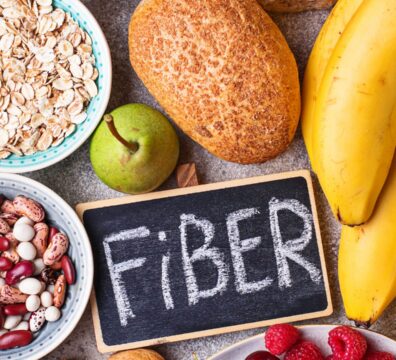
Fibre Maxxing is trending on social media — fibre may genuinely support metabolism, gut health, and fertility. Discover why a fibre-rich diet is becoming increasingly relevant in fertility and reproductive health research.
If you’ve spent any time on TikTok or Instagram recently, you may have come across the term “fibre maxxing.”
Like many viral health trends, it can sound slightly ridiculous at first. Another internet obsession promising better digestion, better hormones, better energy, better skin — and somehow a better life altogether.
But unlike many wellness fads, the growing conversation around fibre is rooted in something scientifically legitimate.
Researchers are increasingly discovering that dietary fibre influences far more than digestion alone. From blood sugar regulation and inflammation to gut microbiome diversity and hormone metabolism, fibre appears to affect several biological systems closely connected to reproductive health.
For couples trying to conceive, that makes the “fibre maxxing” trend more interesting than it may initially seem.
Not because fibre is a miracle fertility cure. It isn’t.
But because modern diets have become strikingly low in one of the most important nutritional components for long-term metabolic health — and fertility is deeply connected to metabolic health.
Fertility is about far more than reproductive organs
When people think about fertility, they usually think about ovaries, sperm counts, ovulation, hormone levels, or embryo quality.
And of course, those things matter enormously.
But reproductive medicine has gradually begun moving away from the idea that fertility exists separately from the rest of the body. Increasingly, researchers understand fertility as something deeply interconnected with metabolism, inflammation, immune function, and overall physiological health.
This is one reason fertility specialists often talk about sleep, stress, exercise, weight regulation, and nutrition alongside medical treatment.
The body does not isolate reproduction from the rest of its systems.
Ovulation depends on hormonal signalling that is closely tied to metabolic function. Sperm development is influenced by oxidative stress and inflammatory processes. Even implantation appears connected to immune and inflammatory balance in ways scientists are still trying to fully understand.
Which brings us back to fibre.
Because fibre influences many of these systems simultaneously.
The quiet disappearance of fibre from modern diets
Most people assume they consume enough fibre. In reality, many adults eat far less than recommended.
Modern food environments make this surprisingly easy.
Breakfast becomes a protein bar eaten in traffic. Lunch is something convenient between meetings. Dinner comes pre-packaged after an exhausting day. Even foods marketed as “healthy” are often highly processed and stripped of much of their natural fibre.
Over time, diets become increasingly refined and increasingly disconnected from whole plant foods.
The problem is that fibre is not nutritionally optional in the way many people imagine.
For decades, fibre was mainly associated with bowel regularity. Today, science paints a far more complex picture.
Dietary fibre helps regulate blood sugar responses, supports cholesterol metabolism, influences satiety, nourishes beneficial gut bacteria, and appears to affect inflammatory signalling throughout the body.
Some fibres are fermented by intestinal bacteria into compounds called short-chain fatty acids, which researchers believe may play important roles in immune regulation and metabolic health.
And these same systems are now being linked to fertility outcomes.
Why metabolic health matters for fertility
One of the clearest connections between fibre and reproductive health involves insulin sensitivity.
Conditions such as polycystic ovary syndrome (SOPK) are strongly associated with insulin resistance, where the body becomes less responsive to insulin over time. Elevated insulin levels can stimulate increased androgen production in the ovaries, potentially interfering with normal ovulation.
High-fibre foods tend to slow glucose absorption and support more stable blood sugar responses after meals. Over time, dietary patterns rich in legumes, vegetables, oats, and whole grains are consistently associated with better metabolic health.
This does not mean that eating more fibre suddenly restores fertility.
Human reproduction is far too complex for simplistic nutritional promises. Fertility challenges can involve genetics, endometriosis, tubal factors, diminished ovarian reserve, male factor infertility, immune dysfunction, age-related decline, and many other variables that nutrition alone cannot resolve.
But researchers increasingly believe that the metabolic environment surrounding reproduction matters more than previously recognised.
And fibre appears to be one small — but potentially meaningful — part of that environment.
The gut microbiome may be more important than we once realised
Ten years ago, few fertility patients had heard the phrase gut microbiome. Now it appears almost everywhere in health research.
Some of the enthusiasm online becomes exaggerated, but the scientific interest itself is real.
Inside the digestive tract lives an enormous ecosystem of bacteria, fungi, and microorganisms that interact constantly with metabolism, immune signalling, and hormone regulation. Researchers are still uncovering how these systems communicate with one another, but it is increasingly clear that the gut affects much more than digestion.
And fibre is one of the primary things feeding this microbial ecosystem.
Different fibres nourish different bacterial species. Greater diversity in plant foods appears to support greater microbial diversity, which researchers increasingly associate with resilience and overall health.
Emerging evidence suggests that disturbances in the microbiome may be associated with conditions such as PCOS, obesity-related infertility, de l’endométriose, and even aspects of male infertility.
Importantly, the science here is still evolving. There is much we do not yet know.
But the broader message remains compelling: reproductive health does not happen independently from the health of the rest of the body — including the gut.
Fibre, inflammation, and reproductive health
One of the most overlooked aspects of fertility is chronic low-grade inflammation.
Not the dramatic inflammation associated with infection or injury, but the quieter inflammatory processes that can develop over years through stress, metabolic dysfunction, poor sleep, smoking, highly processed diets, and sedentary lifestyles.
Researchers increasingly suspect that inflammation may influence ovulation, egg quality, sperm function, implantation, and pregnancy outcomes.
This is partly why dietary patterns rich in vegetables, legumes, fruit, nuts, seeds, and whole grains repeatedly appear associated with better overall health outcomes.
Not because individual foods possess magical fertility properties.
But because these diets tend to support a healthier inflammatory and metabolic environment overall.
By contrast, diets high in ultra-processed foods and low in fibre are often associated with poorer metabolic markers and reduced gut microbial diversity.
Again, none of this should become a source of guilt.
Fertility patients already carry enormous emotional pressure. Many blame themselves for things entirely outside their control. Nutrition should never become another form of self-punishment.
Still, the broader patterns matter.
The body tends to function differently when consistently nourished with minimally processed, fibre-rich foods compared with diets dominated by heavily refined products.
Male fertility deserves far more attention
One of the more frustrating aspects of fertility culture is how heavily responsibility is still placed on women.
In reality, male factors contribute to infertility in a substantial proportion of couples.
Emerging research suggests that dietary quality may influence sperm health through mechanisms involving inflammation, oxidative stress, and metabolic function. Diets low in fibre and high in ultra-processed foods are often associated with poorer overall metabolic health, which may indirectly affect sperm quality.
This does not mean a bowl of oats will solve severe male infertility.
But it does reinforce an important point: preconception health belongs to both partners.
Many fertility specialists now encourage couples to make lifestyle changes together, not because perfection guarantees pregnancy, but because shared habits can support long-term health for both individuals.
Is “fibre maxxing” actually healthy?
The answer depends on how the trend is interpreted.
At its best, fibre maxxing simply encourages people to eat more vegetables, legumes, oats, seeds, berries, and whole grains — foods consistently associated with better metabolic and cardiovascular health.
At its worst, social media can turn it into another form of nutritional perfectionism, where people feel pressured to optimise every bite of food or dramatically increase fibre intake overnight.
Most fertility specialists would likely support the first approach, not the second.
Because reproductive health rarely benefits from extremes.
The body generally responds far better to consistency, adequacy, and long-term nourishment than to aggressive dietary overcorrection.
Rapid increases in fibre intake can also backfire. Suddenly consuming large amounts of fibre may cause bloating, abdominal discomfort, gas, or digestive distress — especially in individuals with sensitive digestion or underlying gastrointestinal conditions.
For most people, the healthiest approach is also the least dramatic one.
More lentils in soup. More vegetables at dinner. Porridge instead of sugary cereal. Whole grains instead of heavily refined carbohydrates.
Not optimisation.
Just nourishment.
Fibre is not a fertility cure — and that distinction matters
One of the dangers of online fertility culture is the subtle implication that pregnancy can be earned through perfect behaviour.
If people simply optimise enough.
Eat clean enough.
Take the right supplements.
Fix the gut.
Lower inflammation.
Track every biomarker.
Then eventually, pregnancy will happen.
But fertility does not work that way.
Blocked fallopian tubes are not caused by low fibre intake. Severe sperm abnormalities cannot be reversed with chia seeds. Endometriosis is a complex inflammatory disease, not a nutritional failure.
Lifestyle factors matter, but so do genetics, age, medical conditions, reproductive anatomy, and biology itself.
Patients deserve honest, evidence-based information without unrealistic promises.
The role of nutrition in fertility care should be supportive, not obsessive.
What does a fibre-rich fertility diet actually look like?
Ironically, it looks much less glamorous than social media suggests.
Usually, it resembles the kind of eating patterns humans followed long before wellness culture existed: vegetables, beans, lentils, oats, berries, nuts, seeds, fruit, and whole grains eaten consistently and without extremes.
Not because one specific food boosts fertility, but because diverse plant-rich diets support many aspects of metabolic and cardiovascular health simultaneously.
Variety matters too.
Different fibres nourish different bacterial species within the microbiome. Eating a wider range of plant foods may therefore support greater microbial diversity.
This is one reason many nutrition researchers now encourage people to focus less on “superfoods” and more on dietary diversity overall.
In practical terms, that might simply mean adding beans to salads, eating oats more regularly, including vegetables at most meals, or replacing highly processed snacks with foods containing naturally occurring fibre.
Small changes repeated consistently tend to matter more than dramatic short-lived overhauls.
The bigger picture: fertility and long-term health
Perhaps one of the most meaningful developments in fertility medicine is the growing recognition that preconception health matters beyond conception itself.
The same dietary and lifestyle patterns associated with better fertility are also associated with improved cardiovascular health, metabolic wellbeing, and healthier pregnancies.
In that sense, fibre is not really about fertility alone.
It is about supporting the body more broadly during one of the most physically and emotionally significant periods of life.
For many couples, this shift in perspective can feel surprisingly relieving.
Nutrition becomes less about chasing perfection and more about creating stability, nourishment, and care within an experience that often feels uncertain.
And sometimes that matters more than any trend ever could.
FAQ – Fibre Maxxing and Fertility
Fibre maxxing is a social media trend that encourages people to intentionally increase their fibre intake, usually through foods such as vegetables, legumes, oats, seeds, fruit, and whole grains. While online trends can sometimes become exaggerated, the underlying science supporting adequate fibre intake is well established.
A fibre-rich diet may support fertility indirectly by improving metabolic health, supporting insulin sensitivity, nourishing the gut microbiome, and helping regulate inflammation. However, fibre is not a treatment for infertility and cannot replace medical fertility care when needed.
Yes. Emerging evidence suggests that overall dietary quality may influence sperm health, inflammation, and metabolic function. Many fertility specialists now encourage both partners to focus on preconception health together.
Increasing fibre intake too quickly may cause bloating, gas, or digestive discomfort. Most people benefit from gradually increasing fibre while also drinking enough fluids.
Foods commonly associated with fertility-supportive dietary patterns include legumes, vegetables, berries, oats, nuts, seeds, fruit, and whole grains. Diversity appears to be particularly beneficial for gut and metabolic health.
Les références
Barnard ND, Holtz DN, Schmidt N, Kolipaka S, Hata E, Sutton M, Znayenko-Miller T, Hazen ND, Cobb C, Kahleova H. Nutrition in the prevention and treatment of endometriosis: A review. Front Nutr. 2023 Feb 17;10:1089891. doi: 10.3389/fnut.2023.1089891. PMID: 36875844; PMCID: PMC9983692.
Cai Q, Chen T. Association Between Dietary Fiber and Female Fertility: a NHANES-Based Study. Reprod Sci. 2023 May;30(5):1555-1564. doi: 10.1007/s43032-022-01103-w. Epub 2022 Oct 31. PMID: 36315393.
Harak SS, Shelke SP, Mali DR, Thakkar AA. Navigating nutrition through the decades: Tailoring dietary strategies to women’s life stages. Nutrition. 2025 Jul;135:112736. doi: 10.1016/j.nut.2025.112736. Epub 2025 Mar 5. PMID: 40203784.
Łakoma K, Kukharuk O, Śliż D. The Influence of Metabolic Factors and Diet on Fertility. Nutrients. 2023 Feb 27;15(5):1180. doi: 10.3390/nu15051180. PMID: 36904180; PMCID: PMC10005661.
Mai H, Ke J, Zheng Z, Luo J, Li M, Qu Y, Jiang F, Cai S, Zuo L. Association of diet and lifestyle factors with semen quality in male partners of Chinese couples preparing for pregnancy. Reprod Health. 2023 Nov 23;20(1):173. doi: 10.1186/s12978-023-01718-5. PMID: 37996913; PMCID: PMC10666430.